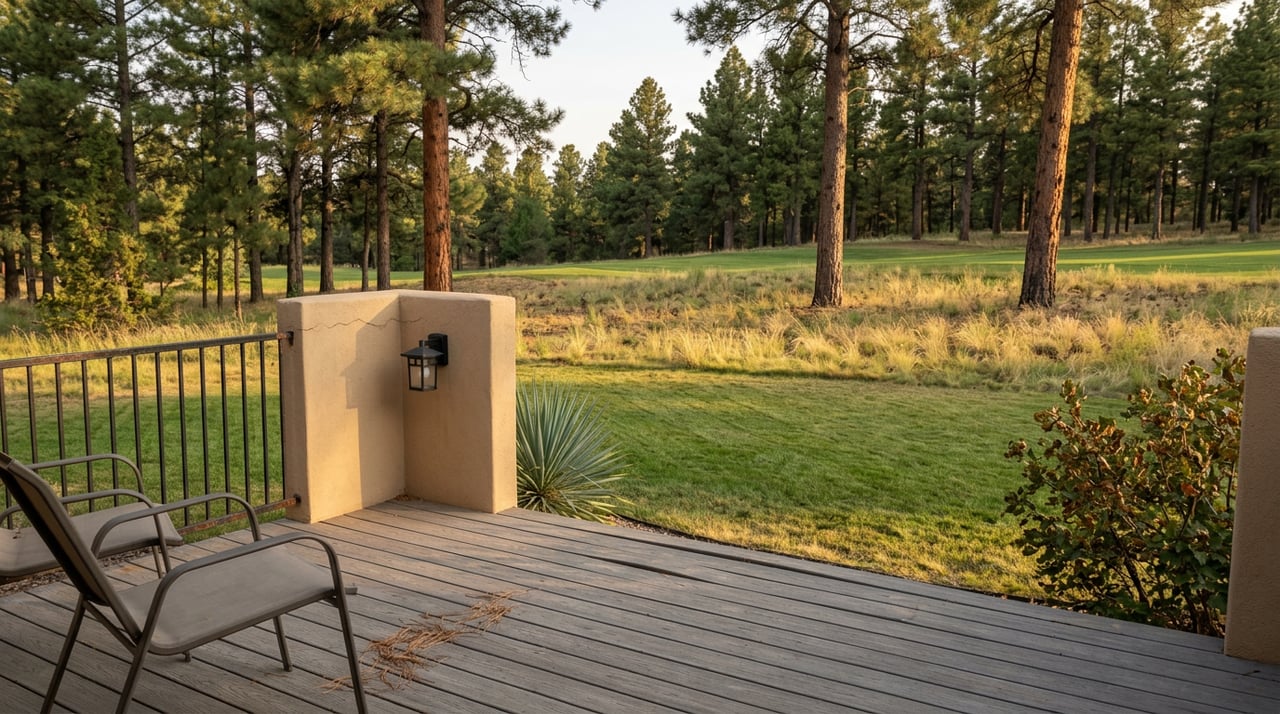
If you live in Albuquerque and you are thinking about buying a rental in Ruidoso, the appeal is easy to understand. It is a drivable mountain market with ski access, summer events, golf, and year-round visitor traffic. The real question is not whether people visit Ruidoso, but whether a specific property can perform well after you account for competition, seasonality, taxes, permits, and local rules. This guide will help you assess Ruidoso rental potential with a practical investor lens so you can make a more informed decision before you buy. Let’s dive in.
Why Ruidoso draws rental demand
Ruidoso has several demand drivers working at the same time. According to the Ruidoso fact sheet, the village has a full-time population of about 7,800, a seasonal population of 25,000, and about 1.9 million annual tourists. The same source notes that 60% of homes are vacation homes, which tells you this is already a destination-oriented housing market.
For Albuquerque buyers, one of the biggest advantages is access. Ruidoso is a drive-to destination, which supports weekend trips, holiday stays, and short getaways without the friction of air travel. That kind of convenience can help support repeat guest demand across multiple seasons.
Understand the seasonal booking pattern
A strong Ruidoso rental thesis usually depends on layered seasonality rather than one single peak season. Ski Apache is about a 15-mile drive from the village and operates between Thanksgiving and Easter, according to the Discover Ruidoso fact sheet. That creates winter demand tied to ski travel and holiday bookings.
In warmer months, Ruidoso Downs adds another tourism wave. It is promoted as the home of the All-American Futurity, with live racing from Memorial Day through Labor Day and year-round off-track wagering, based on the same local tourism source. Add in seven golf courses, trail systems, and indoor attractions, and you get a market with several reasons for guests to visit at different times of year.
That matters because your revenue will likely rise and fall by season. Third-party data from Airbtics says July and August are the busiest months, which lines up with a summer recreation pattern. If you only look at one annual average, you may miss how much your cash flow depends on peak months.
Start with market context, not hype
Tourism in New Mexico has been strong at the state level. According to New Mexico Tourism Department reporting, the state saw $8.8 billion in direct visitor spending and 42.6 million visits in 2024. The state also committed specialized cooperative advertising support to the Ruidoso area in 2024 to help revive visitor spending.
That does not guarantee a profitable short-term rental. It does, however, show that the broader tourism backdrop and destination marketing support are real. For an investor, that is helpful context, but it should sit behind careful property-level underwriting, not replace it.
Read occupancy the right way
One of the biggest mistakes investors make is treating occupancy like the whole story. As AirDNA explains, occupancy is booked nights divided by available nights. That sounds simple, but it can be misleading if you do not compare it with average daily rate, revenue, booking lead time, and the number of nights the home is actually available.
In practical terms, high occupancy does not always mean high profit. A property can stay busy because it is priced too low. On the flip side, a home with lower occupancy could still produce stronger revenue if its nightly rate and booking pattern are healthy.
For Ruidoso, Airbtics estimates roughly 43% occupancy, a $231 ADR, $38,000 in annual revenue, and 1,131 active Airbnb listings as of March 12, 2026. It also gives the market a C+ investability grade. A Village of Ruidoso planning packet cited in the research reported 1,326 active STR properties and 3,298 internet listings in February 2025, which suggests a competitive, supply-rich market even if different data providers count inventory differently.
Focus on supply before you make an offer
Ruidoso is not a market where demand alone carries every deal. With a large number of active short-term rentals and internet listings, supply can put pressure on both occupancy and pricing. That means Albuquerque investors should underwrite conservatively and avoid assuming that every cabin or condo will perform like a top listing.
A better approach is to ask a few direct questions:
- How many similar rentals compete near the property?
- Is the home likely to book in both winter and summer?
- Does the layout fit local occupancy rules?
- Are parking and access practical for guests?
- Will HOA, club, or district rules limit operations or add cost?
If the answers are unclear, that is a signal to slow down and verify the details before you move forward.
Underwrite net income, not gross revenue
Gross revenue numbers can make a rental look attractive at first glance. What matters more is what is left after permits, taxes, insurance, inspections, dues, and ongoing compliance costs. In Ruidoso and Alto, those line items can materially change your returns.
The Village of Ruidoso short-term rental rules say the village recommends short-term rental insurance, requires a CRS business registration number and an STR permit, and requires rentals of 29 days or less to collect Lodger’s Tax and Gross Receipts Tax on the gross charge to the guest. The same source also outlines operating rules that can affect how a property is used and managed.
New Mexico Taxation and Revenue also notes, through the village guidance, that GRT varies by location because it combines state, county, and municipal layers. In addition, marketplace providers may be responsible for GRT on both the rental and their service fee, based on the Village of Ruidoso STR page. For you as an investor, the lesson is simple: tax handling is part of the business model, not a small afterthought.
Know the difference between Ruidoso and Alto
This is one of the most important points for Albuquerque buyers. Not every property in the greater Ruidoso area falls under the same rules. A home inside the Village of Ruidoso and a home inside the Alto Lakes Special Zoning District can have different permit paths, operating standards, and carrying costs.
Inside the Village of Ruidoso, short-term rentals are defined as stays of fewer than 30 consecutive nights, according to the village STR rules. The village requires a CRS Business Registration Number and Short-Term Rental Permit, limits occupancy to two adults per sleeping unit, requires at least one off-street parking space per sleeping unit, and prohibits fire pits and all outdoor burning at STR properties. It also requires a working NOAA Weather Radio.
Alto operates differently. The Alto Lakes Special Zoning District states that it is the sole local government entity with zoning jurisdiction within its boundaries and is separate from the Alto Lakes Golf & Country Club. Its STR procedures require a permit, a compliance certificate, and a 24-hour local contact who can reach the property within one hour.
The Alto occupancy and parking standards are also different. According to the district’s STR procedures, occupancy is limited to two adults per bedroom with a maximum of 10 adults, and the property must have at least three off-road parking spaces. Those details can directly affect which homes work as rentals and which ones are likely to struggle.
Factor in Alto permit and compliance costs
If you are looking at Alto-area properties, do not treat compliance as a one-time box to check. The 2025 Alto STR procedures list a $1,080 STR permit fee for two years, a $150 annual compliance inspection, and nonrefundable fees. The same document also references red-tag fines for violations.
Alto properties may also require extra administration. The district requires a local emergency contact, certified-mail notice to neighboring owners within 200 feet, and posted guest notices, based on the same application procedures. Those are real operating and setup items that belong in your pro forma.
Check club and covenant costs early
Some Alto properties may also carry club-related costs. The Alto Lakes Golf & Country Club real estate covenant page says 12 Alto subdivisions require club membership under their covenants. That same page points buyers to annual dues and other fee categories such as cart, green, and guest fees.
For investors, this means you should verify whether a property sits in a subdivision with mandatory membership or other binding obligations before you make assumptions about monthly carrying cost. In some cases, the location and amenities may support the purchase. In other cases, the extra dues can change the numbers enough to affect your decision.
Use a simple due diligence sequence
If you are buying from Albuquerque, it helps to follow a repeatable process rather than relying on listing appeal alone. In a mountain market, great photos and a strong location do not tell you whether the home clears the rental test.
Here is a practical sequence based on the local rules in the research:
- Identify the exact jurisdiction. Confirm whether the property is in the Village of Ruidoso, Alto Lakes Special Zoning District, or another area.
- Pull the governing documents. Review CC&Rs, subdivision declarations, and any HOA rules.
- Verify STR legality. Confirm the home can legally operate as a short-term rental under current rules.
- Confirm permit and tax steps. Check the required registration numbers, permits, and tax collection obligations.
- Model the true operating costs. Include insurance, inspections, dues, compliance items, parking constraints, and safety requirements.
- Stress-test the income. Use conservative assumptions for occupancy, ADR, and seasonal swings.
This sequence matters because a property can look ideal for guests and still fail as an investment once you account for permit costs, subdivision restrictions, or occupancy limitations.
Why local guidance matters
Buying a resort-area rental from Albuquerque often means evaluating a market you know as a visitor first and an operator second. That is where local knowledge becomes valuable. You need clear information about jurisdiction lines, permitting, covenant layers, and the practical issues that can affect rental performance after closing.
A local advisor can help you narrow your search to properties that fit your goals, whether you are looking for a second home with some rental potential or a more numbers-driven investment. Just as important, you want someone who understands the paperwork and process side of mountain-market transactions, not just the scenery.
If you want help sorting through Ruidoso or Alto properties with an investor mindset, Misty K Strickland can help you evaluate options with local market knowledge, careful transaction support, and straightforward guidance. Before you buy or convert a property for nightly rental use, it is also wise to consult a local tax professional and attorney so you can confirm your legal and tax obligations.
FAQs
What should Albuquerque investors review first before buying a Ruidoso rental?
- Start by identifying the property’s exact jurisdiction, then review subdivision rules, STR legality, permit requirements, tax obligations, and true operating costs.
How seasonal is short-term rental demand in Ruidoso?
- Ruidoso has layered seasonality tied to winter skiing, summer racing and recreation, golf, trails, and weekend mountain travel, with Airbtics reporting July and August as the busiest months.
What occupancy data should investors use for Ruidoso rentals?
- Use occupancy alongside ADR, revenue, booking lead time, and days available, because occupancy by itself does not tell you whether a property is profitable.
What short-term rental rules apply inside the Village of Ruidoso?
- The village requires a CRS Business Registration Number and STR permit, limits occupancy to two adults per sleeping unit, requires off-street parking, and requires Lodger’s Tax and GRT collection for rentals of 29 days or less.
What extra costs should investors expect in Alto?
- Alto investors may need to account for permit fees, annual compliance inspections, local contact requirements, notice requirements, and possible dues or mandatory club membership depending on the subdivision.
Why can two nearby Ruidoso-area properties have different rental potential?
- Nearby properties can fall under different jurisdictions, zoning rules, covenants, occupancy limits, parking standards, and fee structures, which can significantly change how they pencil out as rentals.