Leroy Smith has watched Ruidoso real estate from inside it for years, and when an Albuquerque TV station asked him this summer what was actually slowing sales down, he didn't point to price or interest rates. He pointed to the insurance desk. He told KOB he's watched deals collapse after a carrier simply refused to write a policy on the house, and he put it plainly: "We're not past the disaster. We're still in it. It's an evolving situation."
That's worth sitting with, because the price data doesn't look like a market in crisis. Ruidoso's median home list price slipped from $399,000 in June 2024 to $381,500 in June 2026, a modest two-year drift, not a crash. About 200 realtors are still working the area, a lot for a village this size, and by Smith's account business is steady if slower than the pandemic-era peak. If you only looked at price, you'd conclude Ruidoso had absorbed the South Fork and Salt Fires and moved on.
Price isn't where the friction lives anymore. Insurability is. And insurability doesn't show up as a number on a listing sheet. It shows up at the closing table, or it shows up as the reason there isn't one.
The mechanism nobody explains until you hit it
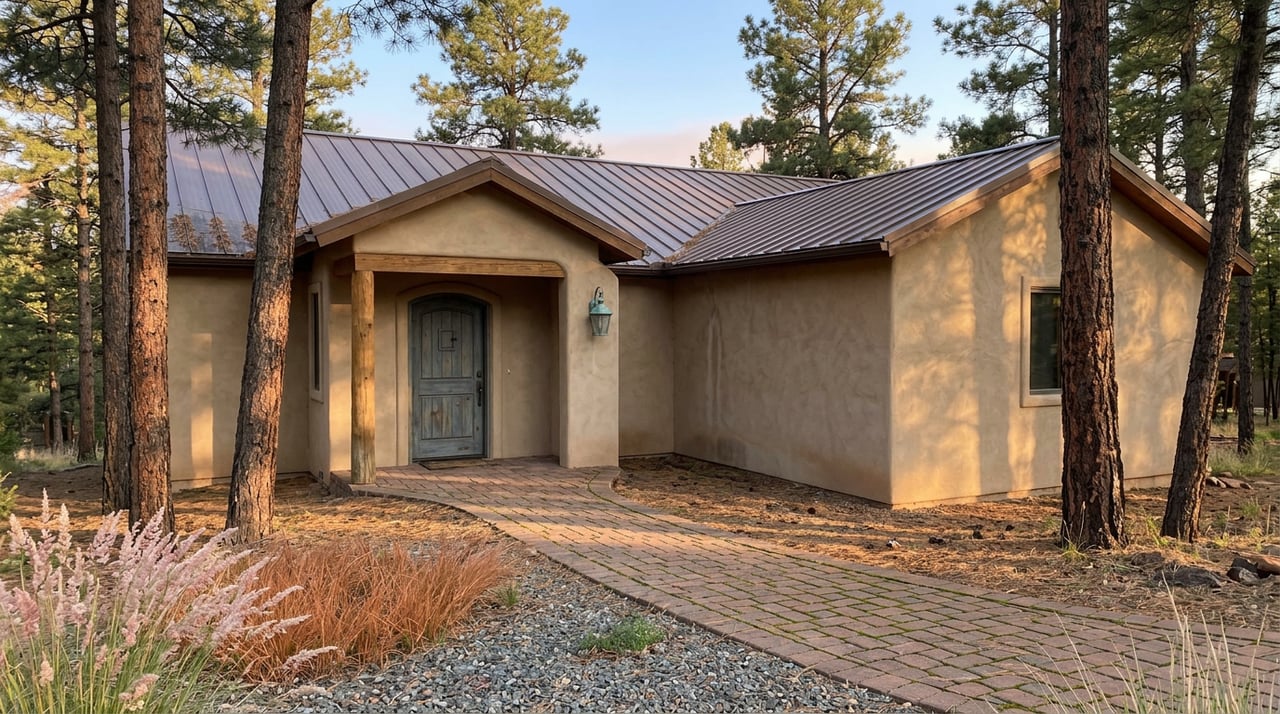
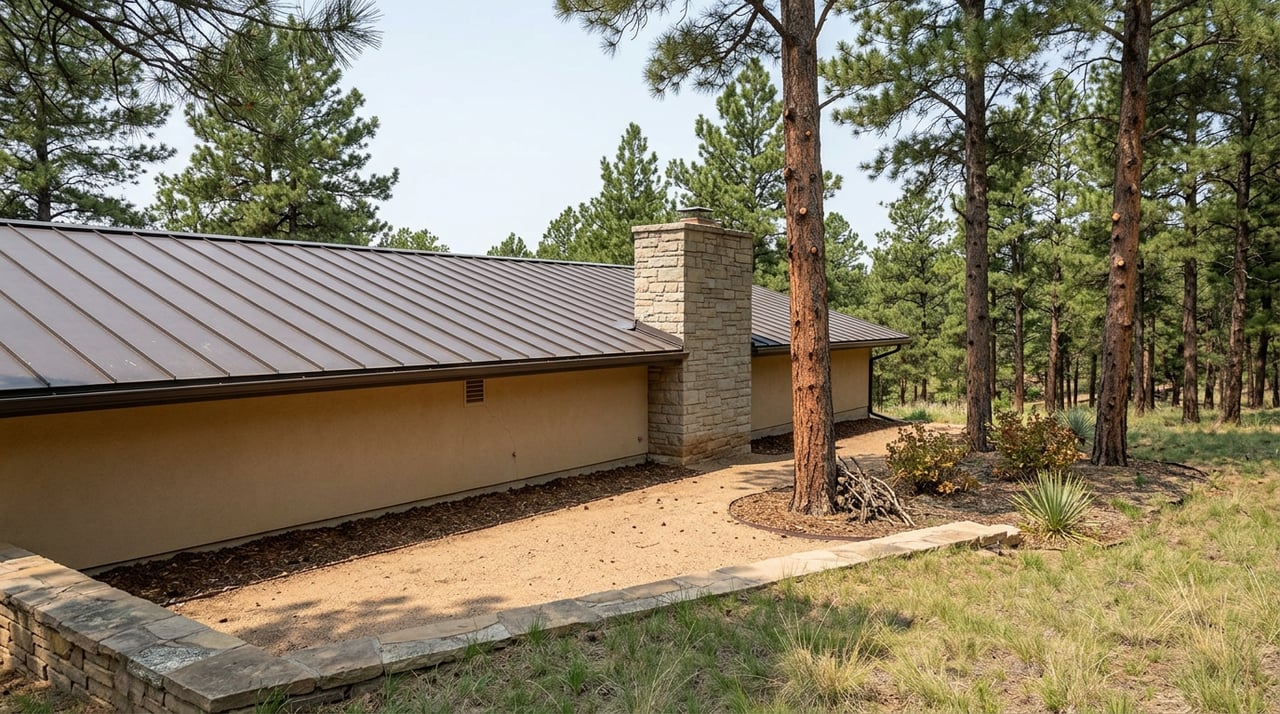
Here's what actually happens after an offer gets accepted on a Ruidoso home today. Your lender requires proof of insurance before funding, same as anywhere. But in a lot of New Mexico's forested counties, the private carriers who used to write that policy without much thought are now underwriting address by address, not town by town. Two homes a few streets apart, one backed against a stand of untreated ponderosa and one sitting on a cleared lot, can get two very different answers from the same company.
Statewide, this isn't a small trend. New Mexico's top insurers issued more than 6,200 non-renewals in 2025, the highest number ever recorded and nearly triple the roughly 2,200 non-renewals in 2021. In Lincoln County specifically, non-renewals rose 18 percent between 2024 and 2025. That's the backdrop Smith is describing when he says deals fall apart at the insurance step. It's not that nobody will write a policy in Ruidoso. It's that you don't know which carrier will say yes to your specific parcel until you actually ask, and asking takes time you may not have built into your contract.
There's a second wrinkle that matters if you're shopping during fire season specifically. New Mexico's FAIR Plan, the state's insurer of last resort, will not accept new applications within 50 miles of an active wildfire. If a fire breaks out anywhere in the region while your file is in underwriting, that door closes until the fire reaches at least 90 percent containment. The FAIR Plan also won't write a policy on a vacant property, defined as one with no tenant for more than 60 days, which matters if you're buying a second home you don't plan to occupy right away or a fixer that will sit empty during a long renovation.
What the state's backstop actually covers
New Mexico raised the FAIR Plan's limits significantly as the private market pulled back:
| Previous limit | Current limit | |
|---|---|---|
| Residential dwelling coverage | $350,000 | $750,000 |
| Commercial coverage | $1,000,000 | $2,000,000 |
That's a real increase, and it means a higher-value Ruidoso property that would have been stuck with an inadequate last-resort policy a few years ago can now actually get covered through the state plan. But the FAIR Plan is fire, extended coverage, and vandalism only. It does not offer premises liability, and liability cannot be added to the policy at all. If your lender or your own risk tolerance calls for liability coverage, that has to come from somewhere else entirely. Buyers who assume the FAIR Plan is a like-for-like substitute for a standard homeowners policy are usually surprised by that gap, and finding it out mid-transaction is worse than finding it out before you write an offer.
Why the county-level number gives you false comfort
When state regulators testified about which counties carry the most wildfire-driven insurance risk, the four named were Rio Arriba, Taos, Sandoval, and Santa Fe. Lincoln County, home to Ruidoso and the actual site of the 2024 South Fork and Salt Fires, wasn't on that list. That's not because Ruidoso is safe. It's because that particular ranking reflects the state's current view of forward-looking wildfire exposure across northern New Mexico's ponderosa and mixed-conifer terrain, not a scoreboard of which communities already lived through a disaster.
The takeaway for a buyer is that a countywide non-renewal statistic, even a real one like Lincoln County's 18 percent increase, tells you about the average parcel in a very large area. It does not tell you about the specific lot you're under contract on. The same risk model that convinced one carrier to decline a house is visible to every other carrier evaluating that address, which is exactly why insurance underwriting in this market feels binary at the property level even when the county-level trend looks moderate.
Premiums have followed a similar pattern of looking calmer than they are. Average rate increases across the state ran 15 percent in 2023 and 9.3 percent in 2024, then slowed to under 5 percent in both 2025 and 2026. That slowdown sounds like relief, but a homeowner who renewed through both of the earlier years absorbed more than a 25 percent cumulative increase before things eased. The recent numbers are smaller because the earlier ones were so large, not because the underlying cost pressure went away.
The one document that actually moves the conversation
If there's a lever a buyer or seller can pull locally, it's defensible space compliance through the Village of Ruidoso's own fire code. The ordinance breaks a property into zones, with the closest zone requiring cleared, low-flammability landscaping right around the structure and a wider zone extending out to 200 feet depending on slope. Compliance isn't self-certified. It requires a final inspection from the Village Forestry Department, and the department also maintains a courtesy list of local forestry contractors who hold a current Village business license and attend the Village's periodic contractor meetings, so property owners aren't left guessing who's qualified to do the work.
State officials have said plainly that keeping private insurers engaged in wildfire-exposed New Mexico runs directly through mitigation like this. There's a $10 million state grant program aimed at helping homeowners pay for exactly this kind of work, tree clearing, vent screening, fire-resistant roofing, and insurance regulators expect carriers to start offering discounts once documented risk reduction becomes standard practice. None of that guarantees a specific insurer says yes to a specific house. But a completed Forestry Department inspection is a concrete, dated document you can hand to an underwriter, and in a market where the answer often comes down to what a carrier can verify about one parcel, having verified proof beats an unverified assumption every time.
Sequence it before you remove contingencies, not after
The practical fix is mostly about order of operations:
- Request an actual bindable insurance quote during your option or due-diligence period, not a generic "we'll probably write this" conversation. A quote that can bind is the only thing that tells you anything real.
- Ask whether any wildfire is currently active within 50 miles before you count on the FAIR Plan as your backup plan. If one is, that door is temporarily closed regardless of how good your defensible space is.
- Ask the seller directly whether the property has a Village Forestry Department defensible-space inspection on file, and if not, whether they're willing to schedule one before closing.
- If liability coverage matters to you, or to your lender, confirm early where that coverage will come from if the dwelling itself ends up insured through the FAIR Plan.
A few questions worth asking directly
Does New Mexico legally require homeowners insurance? No, but if you're financing the purchase, your lender will require it for the life of the loan, and that requirement doesn't bend for a slow market.
Is the FAIR Plan a full replacement for a standard policy? No. It covers fire, related extended perils, and vandalism, and it caps residential dwelling coverage at $750,000. It does not include liability coverage under any circumstance.
Is every property in Ruidoso equally affected? No. Underwriting now happens parcel by parcel based on proximity to burn scar, surrounding vegetation, and documented mitigation, which is exactly why a countywide statistic can't tell you what your specific address will face.
If you're weighing a purchase in Ruidoso or Alto and want to understand what a specific property's insurance picture actually looks like before you write an offer, Misty K Strickland can walk you through it property by property, not county by county. Call or email for a personal market consult.